FaithLands creates space for sharing strategies, success stories, and ideas among local, regional, and state-wide stakeholders to facilitate strong innovative projects without reinventing the wheel. Gatherings allow for discussion and spotlight shares as well as the exchange of resources and opportunities for connection and collaboration.
2025 FaithLands National Conference

September 17-19, 2025
Minneapolis, Minnesota
Co-Sponsors Include: Interfaith Sustainable Food Collaborative, GROW North Texas, Methodist Theological School in Ohio, #NoRegrets Initiative, Kalliopeia Foundation, USDA, Farm Aid, and Presbyterian Hunger Program PC (USA),
Agenda: 2025 FaithLands Agenda
Read More: 2025 FaithLands Recap Article
Featured Tour Sites!

The CSJ Community
Gardens and Food Hub
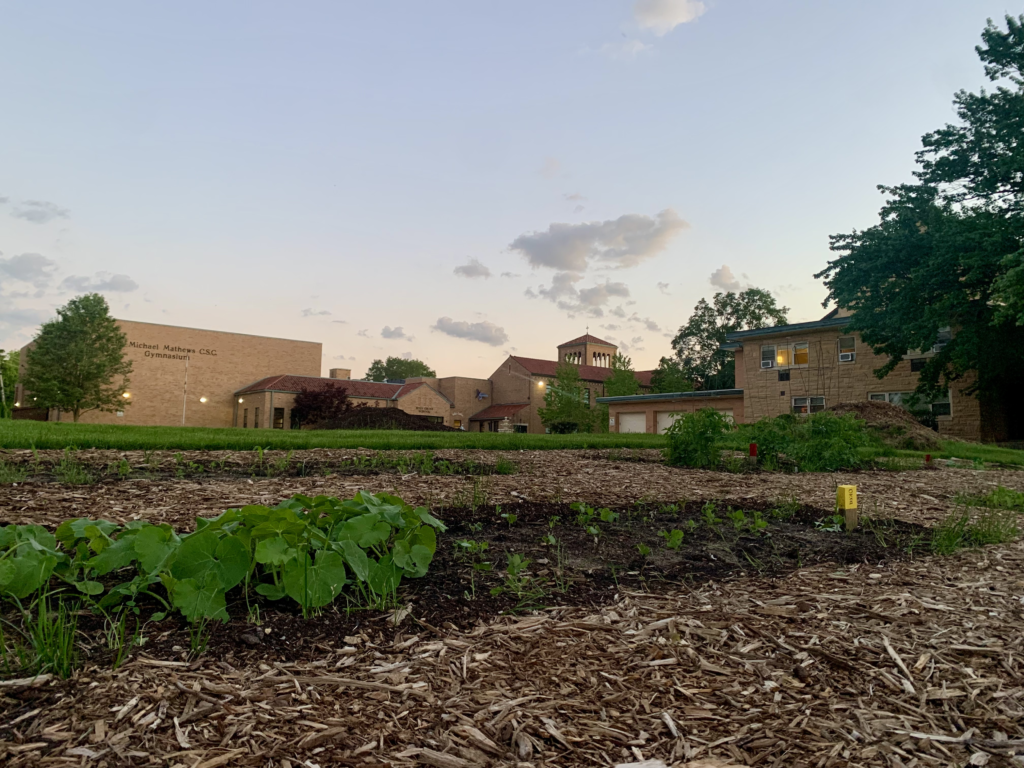
Located next to our conference event site/ Carondelet Event Center, the Food Access Hub is a collaboration between the Sisters of St. Joseph of Carondelet (CSJ) and St. Catherine University. It supports food production, education, nutrition, wellness, and food security on the campus and in the surrounding community. Centered around the food shelf and a network of community gardens, the Hub distributed over 38,000 pounds of food in 2024, including more than 8,000 pounds that were rescued, donated, or grown on-site. The gardens, which span 2,000 square feet and are in their 20th growing season, focus on culturally relevant food and herbs,with approximately 70% of the 700 pounds harvested in 2024 donated directly to the food shelf. The gardening community is made up of both college students and local residents. The Food Access Hub remains open and welcoming to all, regardless of age, background, or experience.

Good Courage Farm
Set on 93 acres of orchards, vineyards, woods and wetland 68 miles west of the Twin Cities, Good Courage Farm is an independent 501(c)(3) nonprofit organization affiliated with The Episcopal Church in Minnesota. Located on the ancestral homelands of our Wahpekute and Mdewakanton neighbors, the faith-based ministry was founded by Rev. Kerri Meyer and Dr. Jen Blecha. The farm grows 170 varieties of organic fruit using regenerative practices. Through partnerships with local food justice organizations like First Nations Kitchen, the McLeod Emergency Food Shelf, and Zion Lutheran’s Senior Dining, they help address food insecurity in the region. The 18 acre farmstead is a place where neighbors of all faiths gather to witness the renewal of God’s creation through sustainable agriculture and community building.
Upcoming Events
No upcoming events, check back soon for updates.
Events Organized by FaithLands Network of Partners
April 5 – 7, 2027 | Church Properties Conference
Church Properties Initiative at the Fitzgerald Institute for Real Estate at the University of Notre Dame, Indiana
Under the banner of words from Psalm 104, “You renew the face of the earth,” the conference will examine the Church as an agent of renewal for communities and environments, with particular attention to contexts of urban disinvestment and the threat of ecological degradation.
The conference brings together two concerns that are increasingly difficult to separate: long-term stewardship of the Church’s property portfolio, and social and environmental sustainability, as changes to church properties profoundly affect communities and shape places.
Pope Francis invited the faithful to develop a distinctly Christ-centered vision of sustainability through his encyclical Laudato Si’, which calls Christians to attend both to “the cry of the earth” and “the cry of the poor” in the double perspective of “integral ecology.” From urban dioceses adjusting their physical footprints to the land use decisions of large-scale faith-based property-owners like religious orders, colleges, and seminaries, the Church today has a critical opportunity to enact (or to ignore) the principles of Laudato Si’ in its own property decisions.
“Church property stewards face decisions that challenge them to incarnate the spirit of the Gospel in the use, maintenance, design, purchase, sale, and governance of property,” said CPI Program Director Madeline Johnson. “Doing so requires a theology that embraces the meaningfulness of the material world, and a disciplinary practice that is open to the transcendent dimensions of the faith.”The fifth annual Church Properties conference will set the stage for such a theology and such a practice to mutually inform one another.